
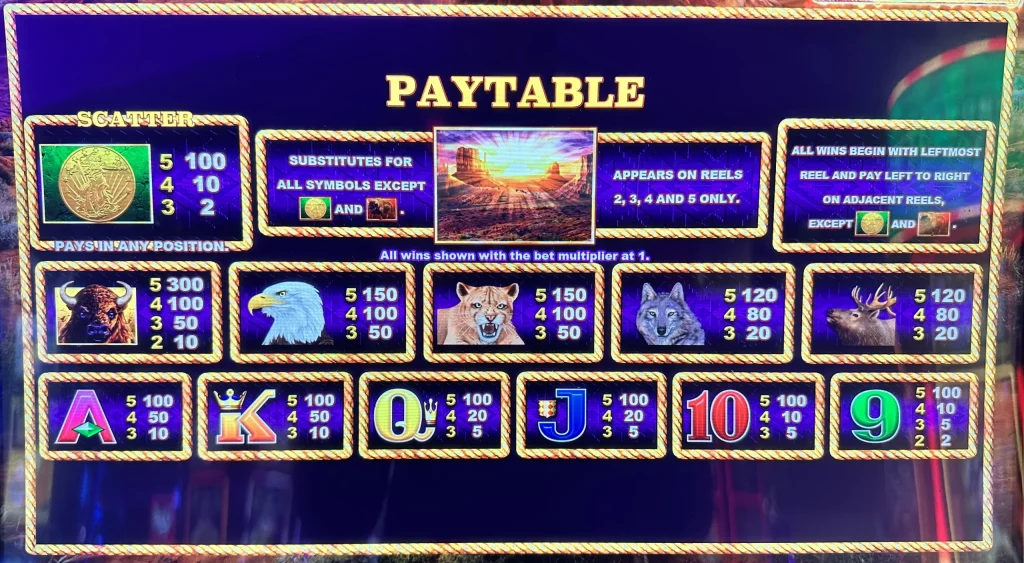
A slot paytable is the built‑in rulebook that quietly describes what the game can pay, how wins are formed, and what risk profile you are stepping into. When players treat that screen as an instruction manual rather than decoration, they move from guessing based on theme to understanding how their bankroll is likely to behave once the reels start running.
Why the Paytable Is the Slot’s Blueprint
Paytables exist because designers need a compact way to communicate all win conditions, prize sizes, and feature rules without cluttering the main screen. As games have grown more complex, that blueprint has expanded to cover bonus mechanics, jackpots, and sometimes even RTP and volatility, turning the paytable into the most concentrated source of truth about how the slot actually works.
Finding and Navigating the Paytable Screen
Modern slots usually hide their paytable behind an information icon or menu, which means players who never click “i”, “Info”, “Help”, or a hamburger icon miss most of the game’s structure. Once opened, the paytable often spans several pages, grouping symbol payouts, line diagrams, feature descriptions, and rules into separate panels that you can scroll or step through using arrows or tabs.
Before jumping into detailed elements, it helps to recognise the typical blocks of information that a paytable contains and why each block matters:
- A symbol section listing icons, their relative hierarchy, and payout values for different match counts.
- One or more pages explaining paylines or ways‑to‑win patterns with diagrams or grids.
- Dedicated explanations of wilds, scatters, and other special symbols that unlock features or substitute in wins.
- Rule panels covering bet denominations, how wins are calculated (per line or ways), and how bonus rounds or jackpots trigger.
Treating these blocks as parts of a single system encourages players to read the paytable as a coherent map: symbol values tell you what to aim for, line or ways pages show where hits must land, special symbols explain how often gameplay can deviate from the base pattern, and rule text clarifies how stake size flows through all of those elements. When combined, the layout reveals not only potential maximum payouts but also how “busy” or quiet the game will feel and how many moving parts are involved in reaching higher prizes.
Symbols and Payout Ladders: Seeing Value, Not Just Art
The symbol section of a paytable ranks everything the reels can show, usually putting top‑value icons at the top and filler symbols at the bottom. High‑value images, often tied to the slot’s theme, pay the most for three or more in a row, while card ranks or simpler icons fill space with smaller rewards that drive frequent minor hits.
To make that hierarchy concrete, consider a simplified symbol ladder for a fictional 5×3 slot at one unit per line:
| Symbol type | 3 in a line | 4 in a line | 5 in a line |
| Premium | 10x stake | 50x stake | 200x stake |
| Mid | 5x stake | 20x stake | 80x stake |
| Low (cards) | 2x stake | 8x stake | 30x stake |
Reading a table like this before playing highlights how much of the game’s potential sits in rare long lines of premium symbols versus more modest mid and low wins. When many symbols only pay meaningfully at four or five in a row, the slot will often feel streaky, whereas generous three‑symbol pays across several tiers indicate a steadier flow of small returns.
Paylines, Ways, and Cluster Rules: How Wins Are Actually Formed
Even a generous pay ladder is irrelevant if symbols land in the wrong places, so paytables also detail exactly which positions need to line up to count as a win. Traditional line‑based slots include diagrams of each active payline, while modern titles often describe “all ways” systems or cluster‑pays rules where adjacency replaces fixed lines as the win condition.
Comparing Line‑Based and Non‑Line Structures
Line‑based games constrain wins to specific paths across the grid, meaning the same symbols can miss if they fall off those paths, whereas all‑ways or cluster designs pay any qualifying pattern that meets adjacency rules. Line diagrams in the paytable reveal whether lines are mostly straight, zig‑zag, or cover extreme angles, which affects how often coincidental symbol clumps translate into actual wins.
Understanding these structures leads to different practical expectations: fixed‑line slots with fewer lines concentrate volatility, because misses on near‑lines are common, while all‑ways titles with many potential patterns trade some individual line value for more frequent low‑level hits. Cluster‑pays layouts, described in the paytable text and diagrams, tend to create longer cascades of small or medium wins, making sessions feel more dynamic even though the underlying RTP and house edge remain governed by the same mathematics.
Wilds, Scatters, and Feature Triggers in the Paytable
Special symbols often occupy their own section of the paytable because they change how standard win logic applies. Wilds usually substitute for regular symbols to complete lines, scatters may pay anywhere on the grid, and other feature icons can trigger free spins, pick‑and‑win rounds, or jackpots, each with specific conditions explained in the text.
Many modern guides emphasise reading these descriptions carefully because the same label—“wild” or “scatter”—can hide very different behaviours across games, from simple substitution to expanding, sticky, or multiplier effects. When players understand exactly how these mechanics intervene in base play, they can interpret the frequency and size of feature hits not as surprises but as designed redistributions of the game’s long‑term return across base and bonus states.
In multi‑category gambling environments where slots sit alongside sports markets and table games, the prominence of feature descriptions in a paytable also doubles as a signal of how much of a title’s volatility is loaded into rare bonus rounds. That distinction becomes important when comparing a feature‑heavy, swingy slot against more stable products offered through a broad betting interface, because the paytable is the one place where those feature‑driven risk concentrations are spelled out in advance rather than discovered through expensive trial and error.
RTP, Volatility, and Other Quantitative Clues Inside the Paytable
Beyond symbols and features, many regulated online titles surface theoretical return to player (RTP) and volatility level either directly on the paytable pages or in closely linked game‑rules panels. RTP percentages show the long‑run share of stakes expected to return to players, while volatility labels—low, medium, high, or more descriptive tags—signal how unevenly those returns will be distributed across sessions.
Some regulators require this information to be accessible through the same info and paytable menus, so players who habitually check these sections gain a clearer sense of expected cost and swing size per unit wagered. When the paytable presents both figures, it becomes possible to distinguish between two slots with similar RTPs but very different volatility, helping players align game choice with bankroll depth and tolerance for long dry spells versus frequent small hits.
Paytable Reading in Real Multi‑Game Hubs – UFABET
In a setting where players can move quickly among slots, sports markets, and other products, the discipline of reading paytables turns into a practical filter rather than a theoretical exercise. When someone uses UFABET as a broader betting hub, the sheer number of available slot titles means that only a structured approach—checking symbol ladders, line or ways configurations, feature concentration, and any visible RTP or volatility notes in the paytable—can prevent random game selection from pushing them into risk profiles that do not match their bankroll or goals. Comparing how often features are expected to intervene, how steeply top‑symbol payouts are weighted, and whether the paytable offers transparent mathematical information allows users to treat each slot as a defined contract, which is very different from choosing based on branding or theme art alone within a busy multi‑product environment.
Applying Paytable Insight to Budget and Session Planning in casino online Contexts
In an online setting where most games are a click away, paytable literacy becomes one of the few consistent tools players can use to shape session outcomes beyond pure luck. By reading symbol tiers, hit structures, and any disclosed RTP or volatility markers before committing stakes, a player can estimate how quickly bets might cycle, how often balance‑boosting features could realistically appear, and what size of top prize is actually supported by the math rather than just highlighted in marketing.
When those habits are carried into a broader คาสิโนออนไลน์ ecosystem, the paytable effectively acts as a common language across providers and themes, making it easier to compare titles that superficially look very different. The more consistently a player checks and interprets these panels, the more session planning becomes a matter of choosing known trade‑offs—steady grind versus explosive swings—rather than stumbling into games whose underlying structures are opaque until large losses expose them.
Summary
Reading a slot paytable carefully turns a visually driven game into a transparent ruleset where symbol hierarchies, line or ways structures, special symbols, and feature triggers are clearly mapped. When players also note any RTP and volatility clues in those same panels, each slot stops being a mystery and becomes a defined risk–reward profile that can be matched to bankroll, session length, and tolerance for swings. Across individual titles and wider online gambling hubs, the paytable remains the most compact, reliable source of information about how a slot truly behaves, making it an essential pre‑play step rather than an optional extra.