
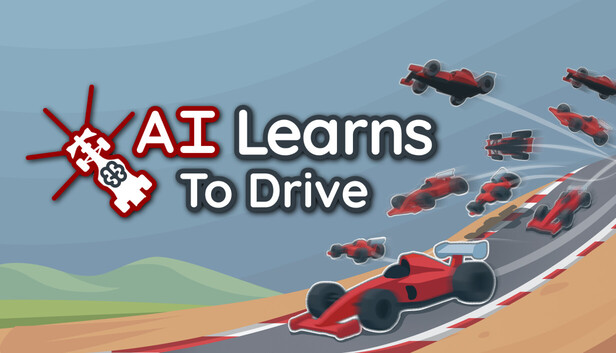
The world of car games has always been exciting, from the earliest arcade racing cabinets to the latest hyper-realistic simulators. With each technological leap, the way players experience car games has evolved dramatically. Today, artificial intelligence (AI) and machine learning are shaping the future of these games in ways we could barely imagine a decade ago. These technologies are not only making car games more engaging but are also creating a new standard for realism, adaptability, and personalized gameplay.
How AI is Transforming Car Games
Artificial intelligence has become a cornerstone in modern game development, and car games are no exception. AI in car games goes beyond simple opponent behaviors; it creates dynamic environments that react to the player’s choices in real time. For example, AI-driven opponents can analyze a player’s driving style and adjust their strategies accordingly. This makes each race unique, providing a more challenging and enjoyable experience. Additionally, AI helps in generating realistic traffic patterns, weather conditions, and road hazards, which can greatly enhance the immersion of racing simulators.
Game developers are increasingly using AI to improve non-player characters (NPCs) in car games. These NPCs can now make intelligent decisions, such as overtaking at the right moment, taking alternative routes, or even reacting to collisions. The result is a racing experience that feels more lifelike and less predictable. For players, this translates into endless possibilities, as no two races will ever play out in exactly the same way.
Machine Learning for Personalized Gaming Experiences
Machine learning is another revolutionary tool changing how car games are designed. Unlike traditional programming, where every outcome must be pre-coded, machine learning allows car games to learn from player behavior. By analyzing data such as speed patterns, preferred routes, and driving tendencies, the game can adapt to the individual player, offering a tailored experience.
For instance, in a machine learning-driven car game, a beginner might receive subtle guidance to avoid frustration, while a skilled player could face increasingly challenging AI opponents. Some games even adjust track difficulty or suggest new racing strategies based on accumulated player data. This level of personalization ensures that both casual gamers and competitive racers can enjoy a satisfying experience.
Machine learning also contributes to predictive modeling, where the game anticipates player actions and adapts the gameplay accordingly. This can result in smoother, more realistic driving mechanics, and smarter opponents that provide a true test of skill without feeling unfair. The integration of these technologies demonstrates how AI and machine learning are becoming essential for the next generation of car games.
Enhancing Realism with AI-Driven Physics
One of the most exciting aspects of modern car games is the realism they offer, and AI is at the heart of this innovation. Traditional racing games often rely on static physics engines, which can feel artificial and repetitive. By incorporating AI-driven physics, developers can create cars that react more like real vehicles, taking into account factors like tire grip, suspension, weather conditions, and engine performance.
This level of detail allows players to experience the thrill of driving without leaving their homes. The sensation of skidding on wet roads, the challenge of navigating sharp corners, and the excitement of high-speed races all become more immersive. AI can even simulate damage to vehicles in real time, affecting handling and strategy. Players must adjust their driving style, adding a layer of realism and strategy that was once impossible in traditional car games.
The use of AI-driven physics also extends to track design. Roads and tracks can dynamically adjust based on in-game conditions, creating scenarios that test a player’s skill and decision-making abilities. This combination of adaptive physics and AI-enhanced environments makes car games more than just entertainment—they become a simulation that pushes players to think critically and react instinctively.
AI in Multiplayer and Competitive Car Games
The multiplayer experience in car games is also benefiting from AI and machine learning. AI opponents can fill in gaps in online races, ensuring that players always have challenging competition, even when human opponents are unavailable. Machine learning algorithms can analyze past multiplayer races to improve matchmaking, pairing players with opponents of similar skill levels for a fair and exciting experience.
AI can also enhance competitive gameplay by tracking player performance and providing personalized feedback. For example, after a race, the game might highlight areas where a player can improve, such as braking technique, cornering efficiency, or optimal acceleration points. This feature turns car games into a learning platform, helping players develop real driving strategies while enjoying virtual competition.
Esports is another area where AI is making an impact. In professional car game tournaments, AI tools are used to analyze gameplay data, predict trends, and even help coaches develop winning strategies. By combining machine learning and AI-driven analytics, competitive car gaming is becoming more strategic and professionalized, attracting a wider audience and increasing the legitimacy of the sport.
The Future Possibilities of AI in Car Games
Looking forward, the potential for AI and machine learning in car games is nearly limitless. One of the most promising developments is fully autonomous NPCs that can learn and adapt in real time, creating a racing environment that evolves with every race. This could lead to games where the AI remembers past races, tracks player improvements, and introduces entirely new challenges based on performance history.
Virtual reality (VR) and augmented reality (AR) are also expected to merge with AI-driven car games. Imagine a VR racing experience where AI adapts not only the track and opponents but also environmental factors such as wind resistance, road texture, and lighting conditions. Machine learning algorithms could monitor player reactions, adjusting the game’s difficulty and immersion level for an optimal experience.
Moreover, AI has the potential to revolutionize game development itself. Procedural content generation, powered by AI, can automatically create new tracks, cars, and challenges, reducing development time while offering players endless variety. Machine learning can also enhance game testing, identifying bugs and optimizing performance before release, ensuring a smoother and more polished gaming experience.
As AI continues to advance, car games will become more than just racing simulations. They will evolve into interactive, adaptive experiences that challenge players, teach skills, and immerse them in virtual worlds like never before.
Conclusion
The future of car games is undeniably intertwined with AI and machine learning. These technologies are transforming the way we play, offering smarter opponents, personalized experiences, and unprecedented realism. From adaptive physics and dynamic environments to competitive multiplayer analytics and VR integration, AI is driving the next generation of car games. As machine learning continues to evolve, players can expect increasingly immersive, challenging, and personalized gameplay that pushes the boundaries of what is possible in virtual racing. The road ahead is bright for car games, and AI is the engine that will make every race an unforgettable experience.